RELAXED TRY DIVES FOR BEGINNERS IN SOUTH TENERIFE
Do You Need a Scuba Instructor Who Speaks Your Language?
Do you need a scuba instructor who speaks your language? You can learn in a second language, but here's the honest case for your own — from a British PADI instructor in Tenerife.
By Brian Harrison — PADI Master Scuba Diver Trainer, Sea Wolf Scuba, Costa Adeje
7/7/20264 min read

You can absolutely learn to dive in a second language — I’ve taught divers from all over the world. But if you have the choice, here’s the honest case for learning in your own.
Let me start with the most important thing, because I don’t want anyone clicking away with the wrong idea: you do not need to be a native English speaker to learn to scuba dive with me. Not even close.
Can I learn to scuba dive if English isn’t my first language?
Yes — completely. Over the years I’ve taught people from all over the world. I’ve taught in Spanish. I’ve even taught a ten-year-old German girl her Open Water as her older sister and Mother already had it and she wanted to be in the gang, ha. Diving is a wonderfully visual, hands-on thing to learn, and a good instructor uses demonstration, signals and patience just as much as words. If you want to learn to dive in Tenerife and English isn’t your first language, you can come and dive with me. We’ll get there, and we’ll enjoy it.
So this isn’t a post telling you that you must book a language specific instructor. It’s the opposite — I’ll happily teach you whatever your first language is, as long as you can understand my accent, ha.. What follows is just the honest version of a more subtle point: if you do have a genuine choice, language is worth thinking about.
Does the language of instruction actually matter?
In a one-hour activity? Not much. In a two- or three-day PADI course where you’re absorbing safety-critical information over and over and then performing it underwater? It can matter more than people expect — and there’s real research behind that, not just opinion.
Across safety-critical training generally, instruction is consistently found to be most effective when it’s delivered in a language the learner properly understands. It’s why workplace safety regulators around the world require training to be given in a language and vocabulary the person can genuinely follow, rather than just technically be exposed to. Understanding a briefing and truly internalising it are two different things — and underwater, that gap matters.
Why nerves make language matter even more
Here’s the part that’s specific to diving. Your first dives are exciting, but they’re also a bit nerve-wracking — that’s completely normal. And stress does something measurable to the brain: it temporarily dampens the very regions responsible for memory and clear thinking. Studies on learning under pressure have found that when someone is anxious, comprehension in a second language takes a bigger hit than in their first language, because their mental energy is being split between managing the nerves and decoding the words.
Put those two things together — a nervous beginner and a second language — and you’re asking someone to do their hardest thinking in their weakest language at the exact moment they’re most stressed. When the instruction is in your first language, that decoding effort disappears, and all your attention is free for the actual diving. Calmer head, clearer understanding, better and safer dive.
It’s not just the words — it’s everything around them
There’s also the simple human side. On a two- or three-day course you’re spending real time with this person. Sharing a first language doesn’t just mean you understand the technical terms — it means you get each other’s accents, slang, humour, the little cultural references that put people at ease. It turns an instructor into someone you can properly relax with, and relaxed divers learn faster and enjoy it more.
And believe me, I know all about accents. I’m from Sunderland. If you’re British, you might follow every word — even my worst jokes. If you’re not, well, I’ve had years of practice slowing down and making myself clear, and we’ll do just fine.
So what’s the honest advice?
If your first language is English, and you’d feel most comfortable learning from a British PADI instructor who talks exactly like you do, then yes — that comfort is a real advantage, especially across a multi-day course, and it’s exactly what Sea Wolf Scuba offers in South Tenerife. If your first language is something else, don’t let that stop you for a second — come and dive, and if a same-language instructor is genuinely an option for you elsewhere, that’s worth considering too.
Either way, the goal is the same: the calmest, clearest, safest first experience of breathing underwater that you can have. Sometimes language is part of that. I’d rather tell you the honest truth about it than pretend it doesn’t matter at all.Ready to learn to scuba dive in Tenerife?

Ready to Join the Pack?
Tell us your dates and whether it’s your first time diving.
Quick replies, clear pricing, zero pressure.
Meet Your Instructor (and the Sea Wolf)
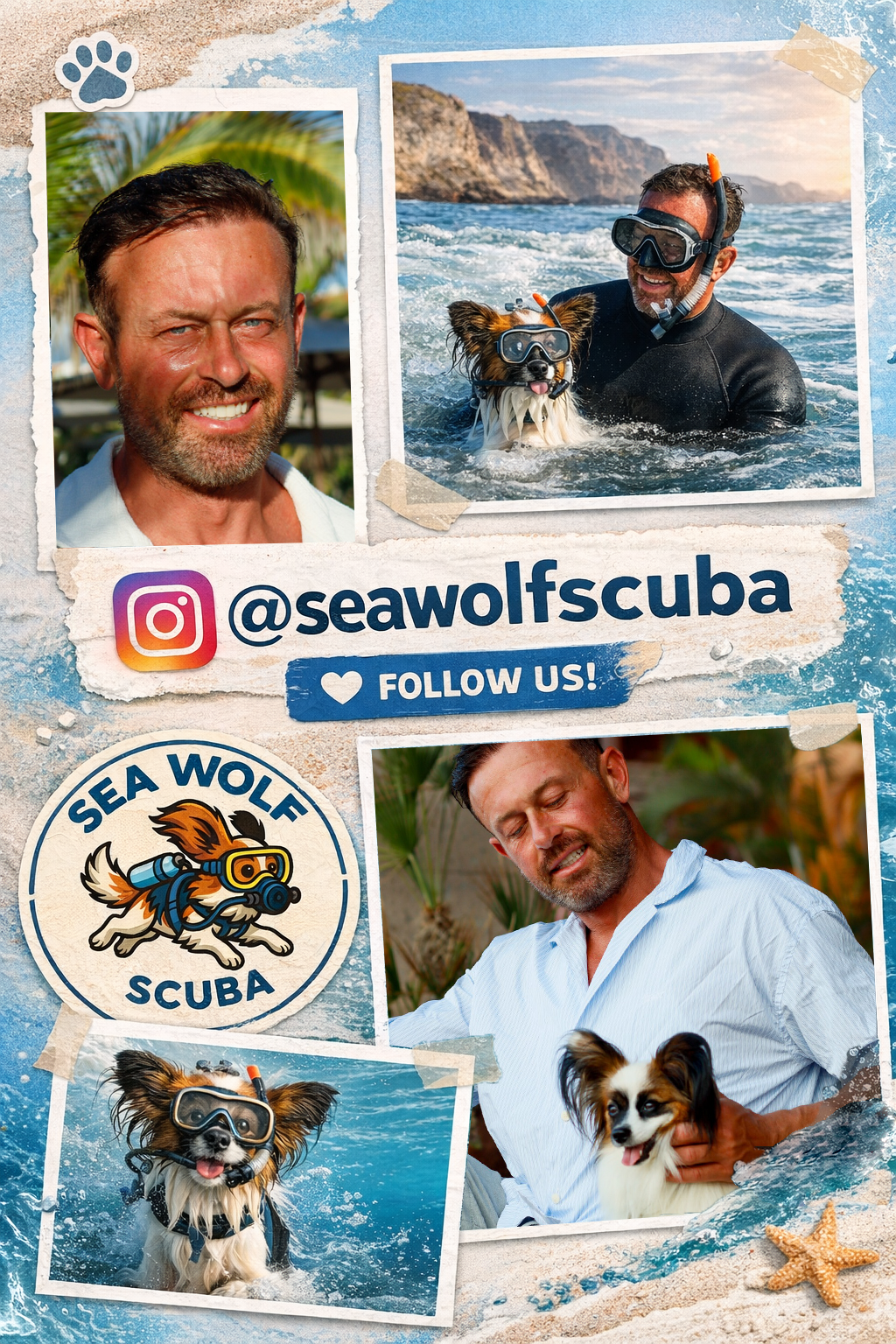
I’m Brian, an English PADI instructor based in south Tenerife. I specialise in calm, confidence-building first dives for beginners.
Sea Wolf Scuba is a small, personal operation — slower pacing, tiny groups, and a strong focus on safety and comfort. I’m usually joined by Lobo, the little “sea wolf” who inspired our logo and supervises the surface intervals.