RELAXED TRY DIVES FOR BEGINNERS IN SOUTH TENERIFE
Why PADI Courses Tenerife? Sea Wolf Scuba Explains Honestly
Explore PADI courses Tenerife with Sea Wolf Scuba. Our PADI Master Instructor gives an honest guide to why we use PADI for scuba diving in Tenerife.
By Brian Harrison — PADI Master Scuba Diver Trainer, Sea Wolf Scuba, Costa Adeje
5/27/20265 min read
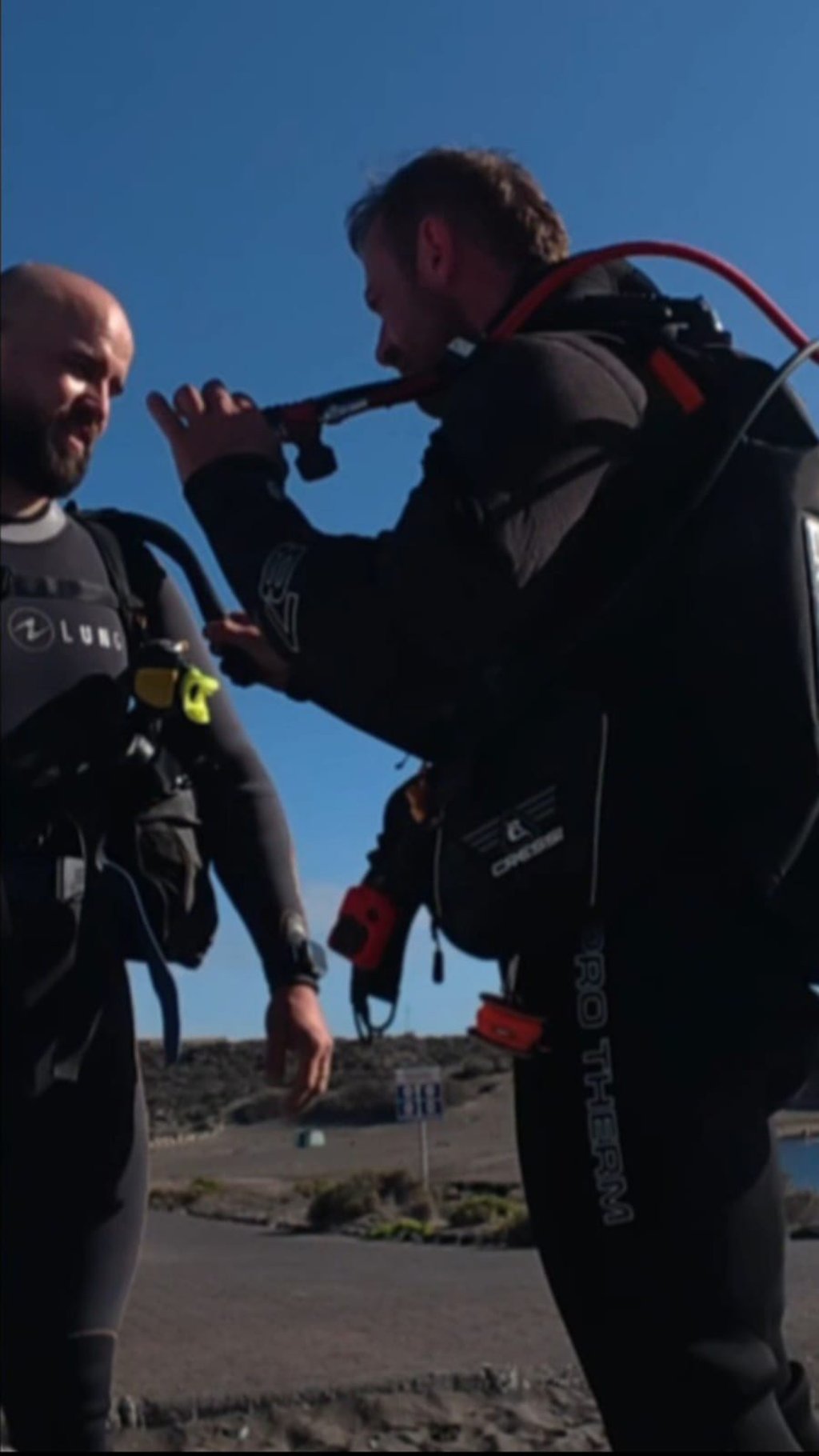
If you've been looking into scuba diving in Tenerife, you've probably noticed that many dive operators here offer PADI courses. Some offer SSI. A handful offer BSAC. And if you're a complete beginner, you've probably wondered whether it actually matters.
It's a fair question. And unlike a lot of dive operators who'll give you the corporate answer, I'll give you the honest one.
What Is PADI, Actually?
PADI stands for Professional Association of Diving Instructors. It was founded in 1966 and has since certified over 29 million divers worldwide, operating across more than 186 countries. It's the largest recreational diving training organisation on the planet — by a significant margin.
The analogy people use most often is that PADI is the Coca-Cola of diving. It's not necessarily because it's objectively the best option in every situation. It's because it's everywhere, everyone knows it, and when you're standing in front of a dive centre in the Maldives or the Red Sea or the Great Barrier Reef, handing over a PADI card is never going to get you a blank look.
PADI vs SSI vs BSAC — Does It Actually Matter?
Here's the bit most dive operators won't tell you: for a recreational diver, the difference between PADI, SSI and BSAC is genuinely minimal.
All three organisations are members of the World Recreational Scuba Training Council, which sets the minimum safety standards that every certification agency must follow. The standards for an Open Water Diver course — the depths, the skills, the number of dives required — are essentially identical across all three. A PADI Open Water card and an SSI Open Water card get you into the water at the same dive sites, to the same depths, in the same countries.
The practical differences are mainly in how the training is delivered. PADI uses a fixed, standardised curriculum — every PADI Open Water course, anywhere in the world, follows the same structure and covers the same skills in the same order. SSI gives instructors more flexibility to adapt the course. BSAC is club-based, heavily UK-oriented, and uses a slightly different philosophy — excellent for British divers who want to dive in British waters, less universal for someone who wants to dive globally.
For a beginner doing their first certification on holiday in Tenerife, none of these differences are going to meaningfully change your experience.
So Why Do I Use PADI?
Three reasons, and I'll be straight about all of them.
1. Recognition. To me, before my dving career started, PADI was always just the benchmark and anything else was second best, I'm not now claiming that to be the case, infact you could argue easily that might not be, but it's how I viewed it, and maybe it's how you or others view it also. When you surface from your Open Water course in Tenerife with a PADI card and you turn up at a dive centre in Thailand two years later, there are zero questions asked. PADI is the universally understood language of recreational diving. SSI is also widely recognised and growing, but PADI still has the edge in sheer global ubiquity. For a British tourist who wants to dive on future holidays anywhere in the world, PADI is the safer long-term bet.
2. The eLearning system is genuinely good. PADI's online theory component — completed on your phone or laptop here or before you arrive in Tenerife, is easy to navigate, comprehensive and I've never known IT issues with it. It means we can comfortably spend less time in classrooms and more time in the water, which is better for everyone. You arrive ready to dive rather than ready to sit through a lecture.
3. I'm a PADI Master Scuba Diver Trainer. This is the highest recreational teaching qualification PADI offers before you reach the instructor development level. It means I'm qualified to teach the full range of PADI recreational courses — from try dives right through to Divemaster — and that I've been independently assessed and approved to do so. It's not a marketing badge. It means something in terms of what I can offer you.
What About BSAC? I'm British — Should I Use That?
BSAC is a fine organisation and I have nothing against it. But for a British tourist learning to dive in Tenerife with the intention of diving on future holidays, PADI is the more practical choice. BSAC's strength is its community club structure, which works brilliantly in the UK if you're wanting to club dive, or swim through the plane at Capenwray. Outside the UK, particularly at tropical resort diving destinations, PADI is simply more universally understood.
If you're planning to dive primarily in UK waters through a local club back home, BSAC is worth investigating. If you want a qualification you can use anywhere in the world — a dive in Tenerife this year, somewhere in Southeast Asia next year, the Caribbean the year after — PADI is the one to get.
Does the Certification Agency Matter More Than the Instructor?
No. And this is probably the most important thing I'll say in this post.
The agency sets the curriculum and the standards. The instructor delivers the experience. A mediocre instructor with a PADI badge will give you a worse course than an excellent instructor with an SSI badge, every time. Worth noting with this is that this is an industry with a high turnover of staff, the job looks appealing, and obviously to me it remains so, but the wages can be poor, the hours can be long and the dream can soon fade into a grind so you could dive with the same dive shop year after year, and easily find its a diffrent instructor every year, not great for consistency of training.
What actually matters when you're choosing where to do your Open Water course in Tenerife is: how big are the groups, how much time do you get in the water, how experienced and attentive is the instructor, and does the whole thing feel rushed or relaxed?
At Sea Wolf Scuba, groups are a maximum of two students per instructor. Often it's just you and me, if you're a family of 4 I'll have some assistence. The course goes at your pace, not the pace of the most confident person in the group. You get personal attention from start to finish — from the eLearning questions you arrive with through to the final open water dive.
The PADI card at the end is recognised everywhere. The experience of getting it is what makes the difference.
PADI Courses Available at Sea Wolf Scuba
Discover Scuba Diving (Try Dive) — no certification required, minimum age 10
PADI Open Water Diver — the internationally recognised entry-level certification
PADI Advanced Open Water Diver — extends your depth limit and develops your skills
PADI Rescue Diver — the course that changes how you think underwater
PADI Speciality Courses — Deep, Night, Wreck, Peak Performance Buoyancy, Self Reliant and more
PADI Divemaster — the first professional level, internship available
All courses delivered in South Tenerife — Costa Adeje, Los Cristianos, Playa de las Américas and beyond. British instructor. Small groups. Proper diving.
Ready to Get Started?
Get in touch via the website or WhatsApp and tell me what you're looking for — whether it's a try dive on holiday or a full Open Water certification. I'll tell you honestly what's involved and whether the timing works for your trip.
(Lobo is not PADI certified. He has opinions about this. We don't discuss it.)

Ready to Join the Pack?
Tell us your dates and whether it’s your first time diving.
Quick replies, clear pricing, zero pressure.
Meet Your Instructor (and the Sea Wolf)
I’m Brian, an English PADI instructor based in south Tenerife. I specialise in calm, confidence-building first dives for beginners.
Sea Wolf Scuba is a small, personal operation — slower pacing, tiny groups, and a strong focus on safety and comfort. I’m usually joined by Lobo, the little “sea wolf” who inspired our logo and supervises the surface intervals.